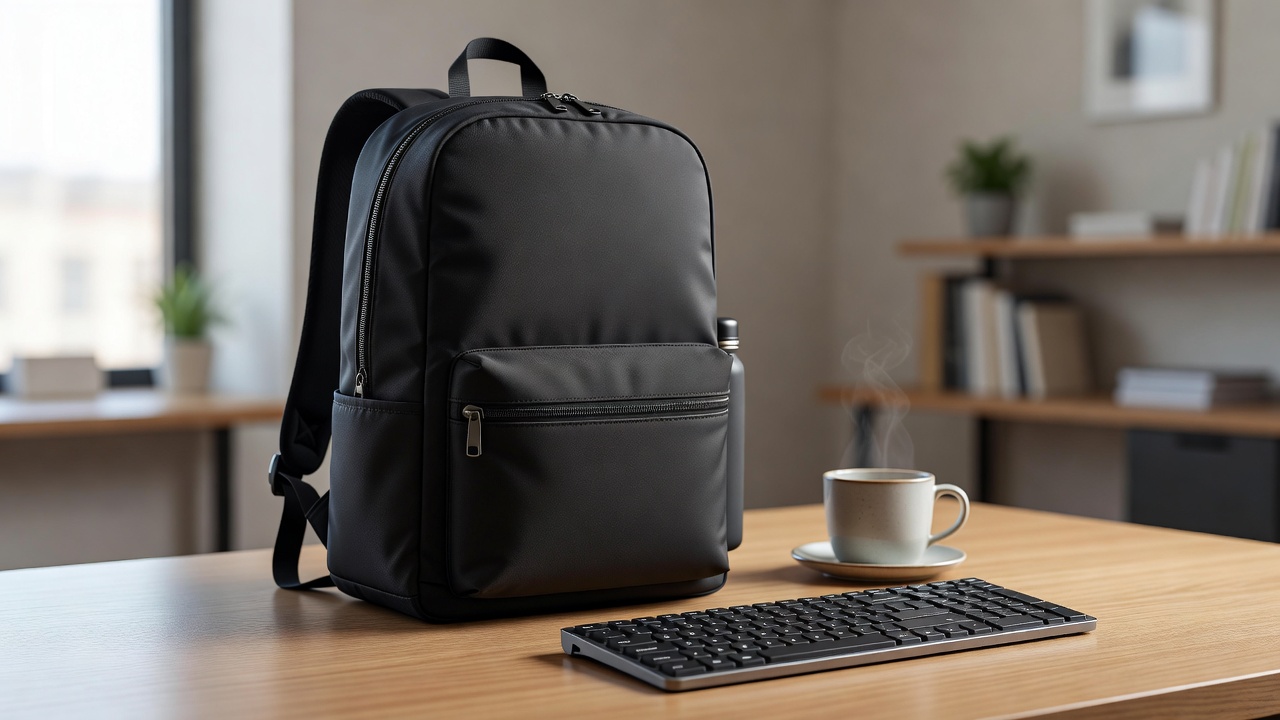
The briefcase is no longer the undisputed king of the workplace. As professionals increasingly carry heavier loads—laptops, tablets, chargers, and ergonomic peripherals—the work backpack has emerged as the most practical solution. However, carrying a backpack in a corporate setting requires a delicate balance: it must offer robust tech protection without looking like you are about to scale a mountain.
The False Bottom: Non-Negotiable Tech Protection
The single most important feature of any work backpack is a suspended laptop sleeve, commonly referred to as a "false bottom." If you look inside the laptop compartment and the sleeve extends all the way down to the exterior fabric of the bag, your computer will absorb the impact every time you set the bag down on the floor.
A proper false bottom suspends the laptop an inch or two above the physical bottom of the bag. This provides a buffer zone, ensuring that when the bag hits the ground, the laptop floats safely above the impact zone. Additionally, the sleeve itself should be lined with high-density padding or micro-fleece to prevent scratching.
Professional Aesthetics and Structure
A key difference between a hiking daypack and a professional work bag is structure. A good work backpack should be self-standing and maintain its shape whether it is completely full or entirely empty. Bags that sag, flop over, or look crumpled appear unprofessional in a meeting room.
To achieve this, manufacturers utilize rigid foams and structured fabrics like ballistic nylon or heavy canvas. The exterior design tends to be minimalist, favoring clean lines, muted colorways (black, navy, charcoal, or olive), and a lack of dangling straps or external mesh pockets.
Tech Organization and Cable Management
The modern professional carries a myriad of cables, dongles, and chargers. An effective work backpack provides dedicated organizational panels to keep this tech from turning into a tangled nest.
- Admin Panels: Look for a front-access pocket that flips open to reveal pen slots, business card holders, and shallow zippered pockets for thumb drives and adapters.
- Tablet Sleeves: Many bags now include a secondary padded sleeve lined with soft materials explicitly designed for tablets or e-readers, keeping them separate from the heavier laptop.
- Cable Routing: Some advanced bags feature internal pass-through ports that allow you to run a charging cable from a power bank inside the bag to your phone in an external pocket.
Travel Integration
For professionals who travel frequently for business, luggage integration is a major bonus. A "luggage pass-through" is a dedicated strap or sleeve on the back panel of the backpack that allows it to slide securely over the telescoping handle of a rolling suitcase. This simple feature makes navigating airport terminals significantly easier, shifting the weight off your shoulders.
Conclusion
The ideal work backpack marries the ergonomic benefits of a traditional pack with the sharp aesthetics of a briefcase. By prioritizing structural integrity, a suspended laptop sleeve, and smart tech organization, you can comfortably carry your entire mobile office while projecting a polished, professional image.