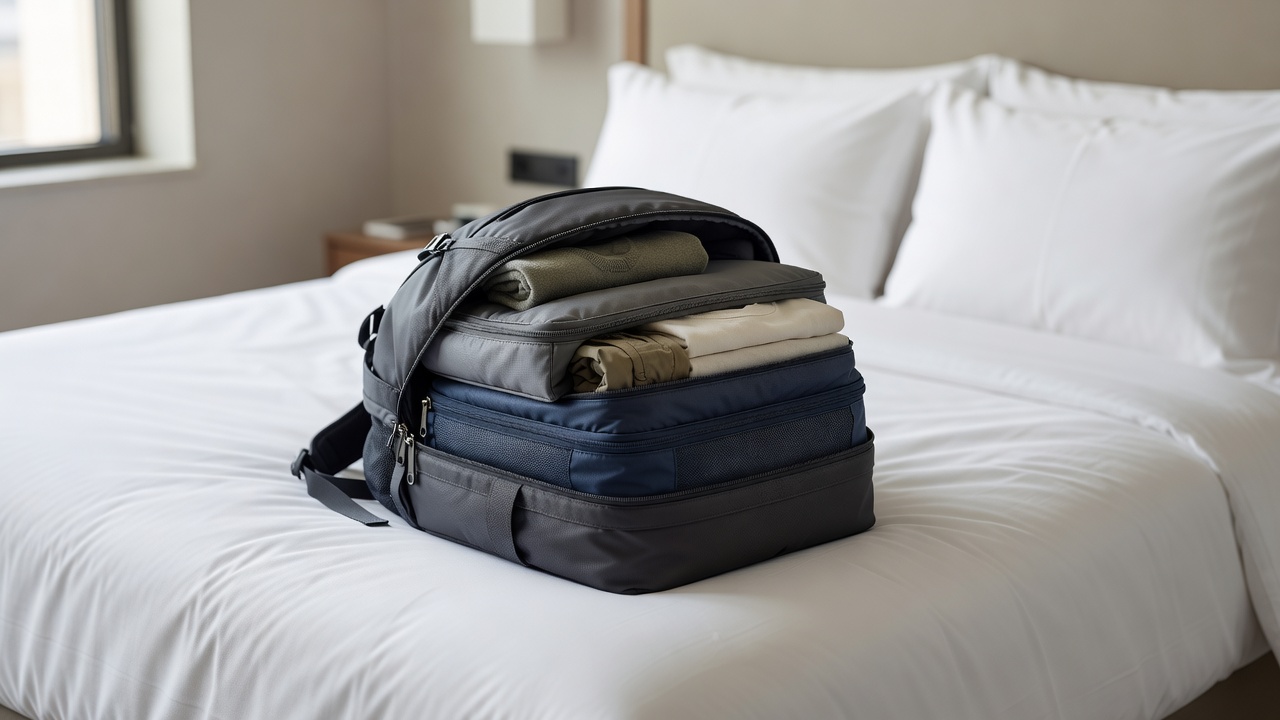
The concept of "one-bag travel" has revolutionized how frequent flyers and digital nomads traverse the globe. By consolidating all your belongings into a single, carry-on compliant backpack, you eliminate the risk of lost luggage, bypass the baggage claim carousel, and gain the mobility to navigate cobblestone streets and crowded subway stations with ease.
Airline Carry-On Compliance
The primary constraint for any travel backpack is airline sizing rules. While dimensions vary slightly between carriers, a generally safe rule of thumb for international carry-on luggage is 22 x 14 x 9 inches (56 x 36 x 23 cm). This physical volume translates roughly to a maximum capacity of 40 to 45 liters.
If you prefer to travel on strict budget airlines (which often enforce smaller "personal item" limits that must fit under the seat in front of you), you will need to look for a bag closer to 28-30 liters, with dimensions not exceeding 18 x 14 x 8 inches.
The Clamshell Opening
Unlike a traditional hiking backpack that loads from the top, a dedicated travel backpack must open like a suitcase. This is known as a clamshell or panel-loading design. The main zipper tracks along three sides of the bag, allowing the front panel to fold completely flat.
A clamshell opening is non-negotiable for serious travel bags. It allows for organized packing, easy access to items at the bottom of the bag without unpacking everything else, and pairs perfectly with packing cubes. When you arrive at your accommodation, the bag essentially functions as a portable dresser drawer.
Weight Distribution and Harness Features
Carrying 35 liters of clothing, toiletries, and electronics can quickly amount to 20 pounds (9 kg) or more on your back. A robust harness system is vital for travel packs, bridging the gap between everyday carry and hiking suspensions.
- Hip Belts: For bags over 30L, a padded, load-bearing hip belt is highly recommended. A proper hip belt transfers up to 70% of the bag's weight off your shoulders and onto your hips. The best travel bags feature removable or hide-away hip belts so they don't dangle during transit.
- Load Lifters: These are adjustable straps that connect the top of the shoulder straps to the main body of the bag. Tightening them pulls the top of the pack closer to your back, reducing the feeling of being pulled backward.
- Stowable Straps: When checking the bag (if forced to on smaller planes) or stowing it in an overhead bin, the ability to zip the shoulder straps and hip belt away behind a back panel prevents them from getting caught or torn.
Security and Tech Access
Security is a major concern when traveling through crowded transit hubs. Premium travel backpacks incorporate discrete security features like lockable kissing zippers on the main compartment, hidden passport pockets flush against the back panel, and slash-resistant fabric reinforcements.
Additionally, accessing your laptop and liquids quickly is critical for navigating airport security lines. Look for bags that feature an externally accessible, padded laptop compartment. This allows you to remove your computer for TSA scanning without exposing the rest of your clothing and belongings to the line.
Conclusion
Investing in a high-quality travel backpack is an investment in stress-free travel. By choosing a bag with a clamshell opening, a comfortable stowable harness, and airline-compliant dimensions, you gain the ultimate freedom to step off the plane and immediately start exploring.