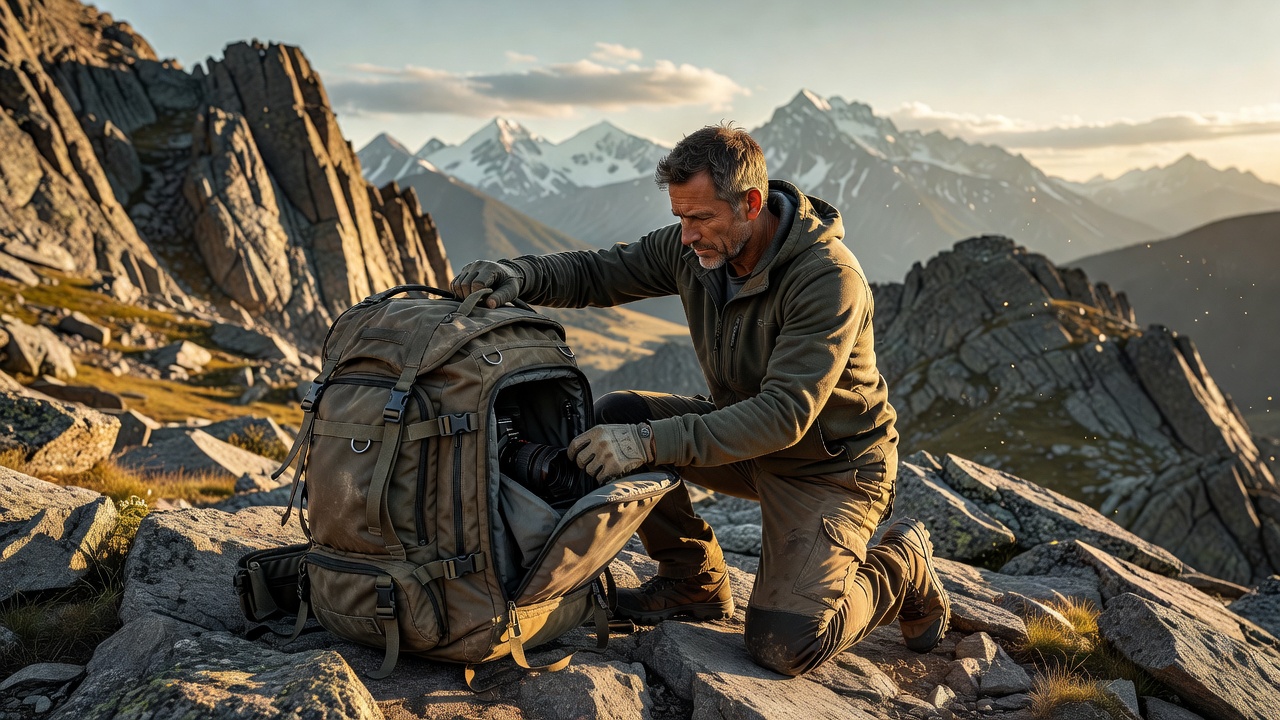
Photography gear is heavy, fragile, and exceptionally expensive. Standard backpacks are entirely unsuited for carrying loose lenses and delicate mirrorless bodies. A dedicated photography backpack is engineered from the ground up for impact protection, modular interior organization, and rapid access to equipment in the field.
Modular Organization and Dividers
The defining feature of a camera bag is its internal compartment. Historically, bags featured sewn-in padding that dictated where specific lenses had to go. Today, the standard is a fully modular system using Velcro-lined padded dividers.
This modularity allows the user to reconfigure the internal layout of the bag depending on the shoot. A wildlife photographer might arrange the dividers to hold one massive telephoto lens down the center, while a wedding photographer might create smaller cubbies for multiple prime lenses, a dual-camera body setup, and speedlights. High-quality dividers are rigid enough to prevent lenses from crushing each other, yet flexible enough to mold around awkwardly shaped gear.
Access Methods: Rear, Side, and Top
How you access your gear is arguably as important as how it is protected. Manufacturers utilize several different access points to cater to different shooting styles:
- Rear Access: The main zipper runs along the back panel (the part touching your back). This is highly secure, as thieves cannot open the bag while you are wearing it. It also means that when you place the bag face-down in the dirt to access your gear, the back panel stays clean.
- Side Access: Designed for run-and-gun shooting. A zippered hatch on the side of the bag allows you to sling the backpack onto one shoulder, swing it around to your chest, and pull out a camera with a lens attached without ever taking the bag fully off.
- Top Access: Common in hybrid bags, allowing you to grab a single camera body quickly from the top compartment while leaving the heavier lenses packed securely at the bottom.
Hybrid Bags vs. Dedicated Photo Bags
Not everyone wants a bag dedicated entirely to camera gear. Many modern photographers require a Hybrid Bag. These split the internal volume—often dedicating the lower 50% to a protective camera cube, while leaving the upper 50% open for standard everyday carry items like a jacket, lunch, or drone equipment.
Alternatively, the "Camera Cube" approach involves buying a standard travel or hiking backpack and inserting a rigid, padded camera cube into the main compartment. This is an excellent solution for hikers who need technical trail suspension but want to carry a DSLR safely.
Exterior Hardware: Tripod Carry and Weather Resistance
Carrying a tripod requires robust external attachment points. Look for bags with deep, reinforced side pockets and sturdy compression straps to lock the tripod against the side of the bag. A tripod mounted on the side will unbalance the bag slightly, so some photographers prefer bags with center-mounted tripod straps on the front panel, which keeps the center of gravity balanced.
Given the value of the contents, weather resistance is critical. While heavy DWR-coated nylons help, any serious photography bag must include a seam-taped rain cover that can quickly deploy over the entire pack during a sudden downpour, sealing the zippers against moisture.
Conclusion
Choosing a photography backpack requires evaluating your specific workflow. If you shoot fast-paced events, side access is paramount. If you hike deep into the wilderness for landscapes, prioritize rear access and thick, comfortable suspension. The right bag ensures your focus remains entirely on capturing the scene, rather than worrying about your equipment.